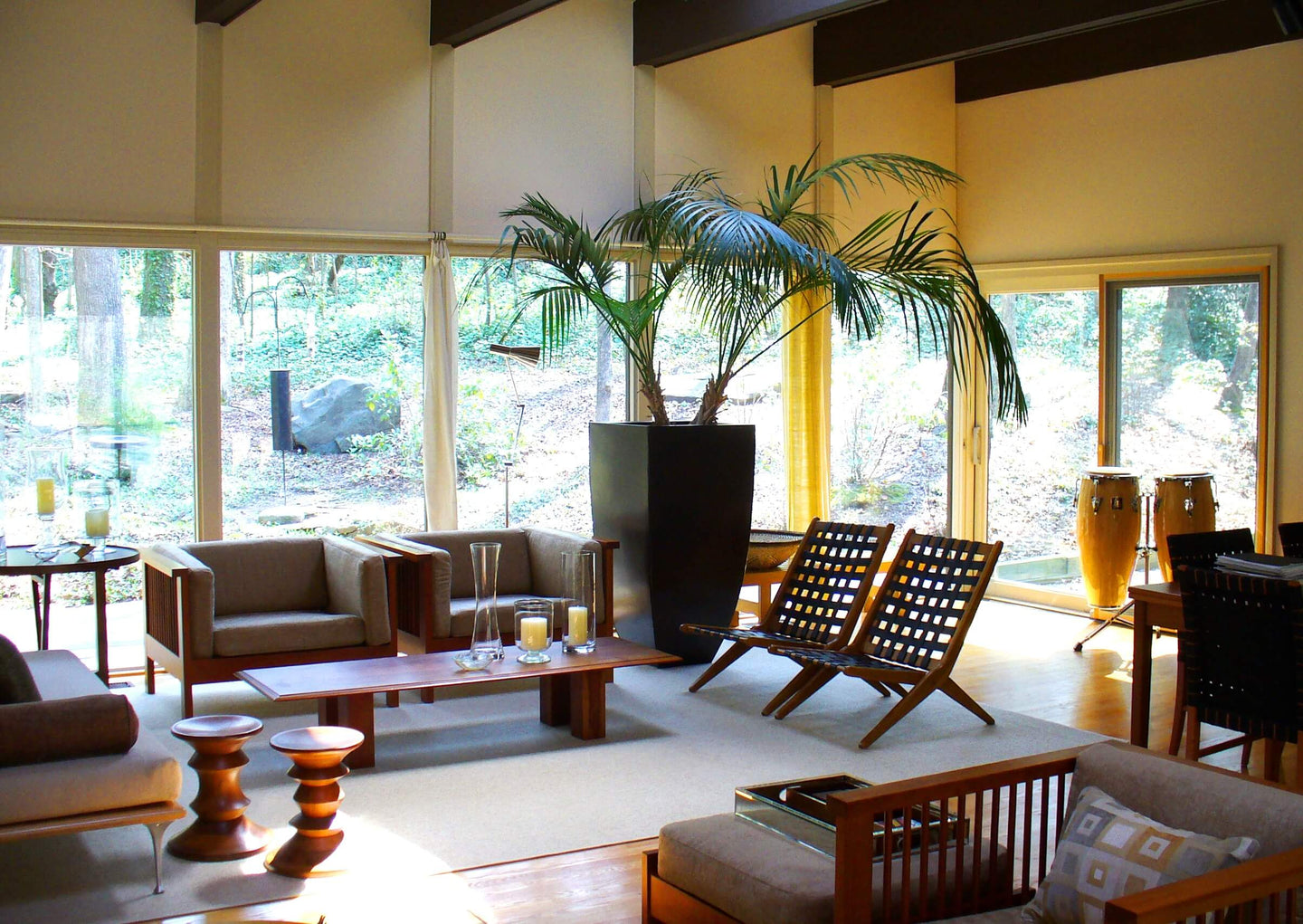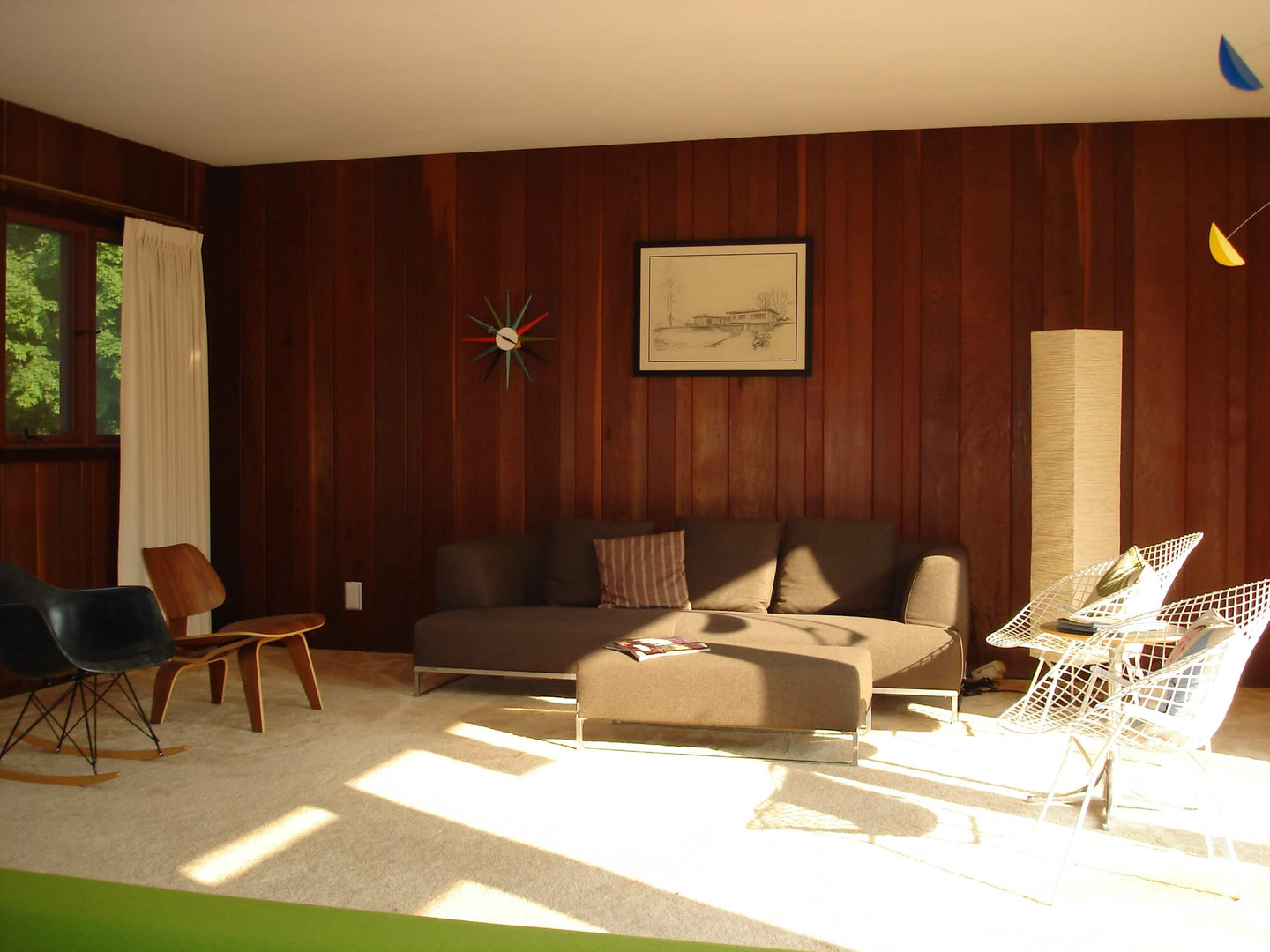
And everyone had their own unique interpretation of it, too, of course, especially since its creators derived from all over the globe. Namesake coffee tables from Japanese-American artist Isamu Noguchi; Art, Swan, and Egg chairs from the Danish visionary Arne Jacobsen; and, of course, anything made by American couple Charles and Ray Eames: iconic pieces of furniture made from molded plywood, fiberglass, and stainless steel.
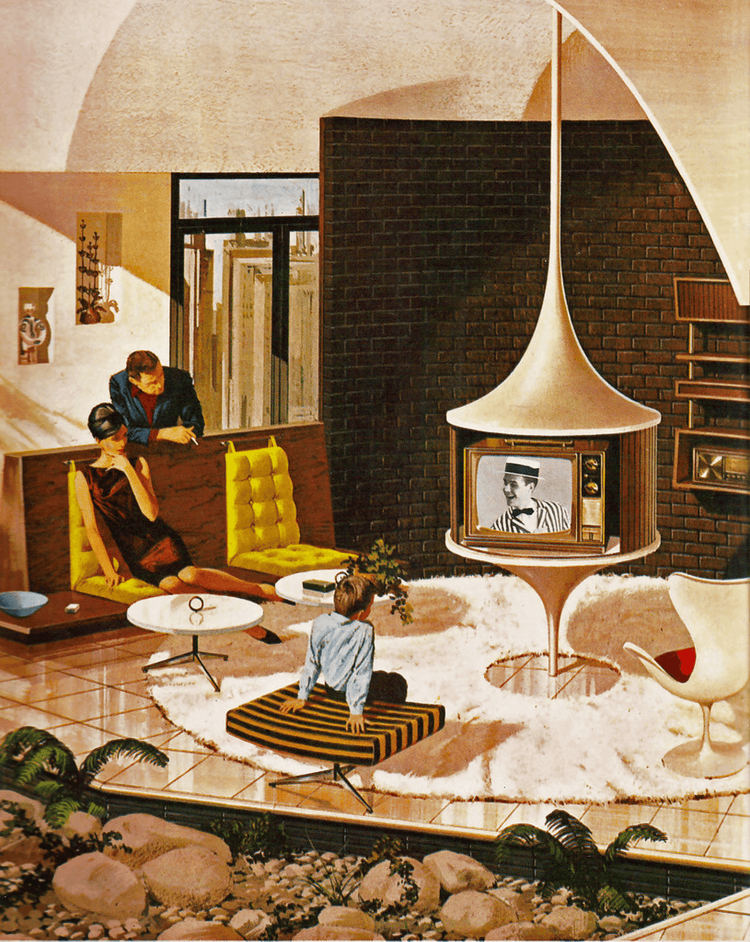
Characterized by its simplicity and functionality, the mid-century modern design style is still displayed everywhere today, from movies (like “The Graduate”) and television (“The Marvelous Mrs. Maisel”) to home decor magazines and restaurant concepts. (Think warm hues, minimalistic details, wood paneling — but like chic wood paneling, not the kind that rivals the interior of a HGTV fixer upper before it’s remodeled — and bubblegum pops of color.) It’s functional and uncluttered, flawlessly including both artificial as well as natural material in its composition, like plastic, vinyl, glass, and marble.
However, since it’s classic and understated — consisting of sleek, clean lines and created with nominal fuss — it needs to be handled with care and consideration. Arranged just right — embracing its organic, geometric shapes, allowing “form to follow function,” and implementing the perfect lighting (more on that in a minute) — you’ll have yourself a statement room, one to be envied by all who are lucky enough to enter.
In order to mimic your mid-century modern style to be more evocative of “Mad Men” and less “The Brady Bunch,” here are four tips to keep in mind: